How it works
A cycle, not a course.
Passage does not hand you a syllabus and track your position in it. It runs a loop: understand the learner, decide the next best step, teach it, read what happened, and decide again.
01 · Assess
Passage learns where you are
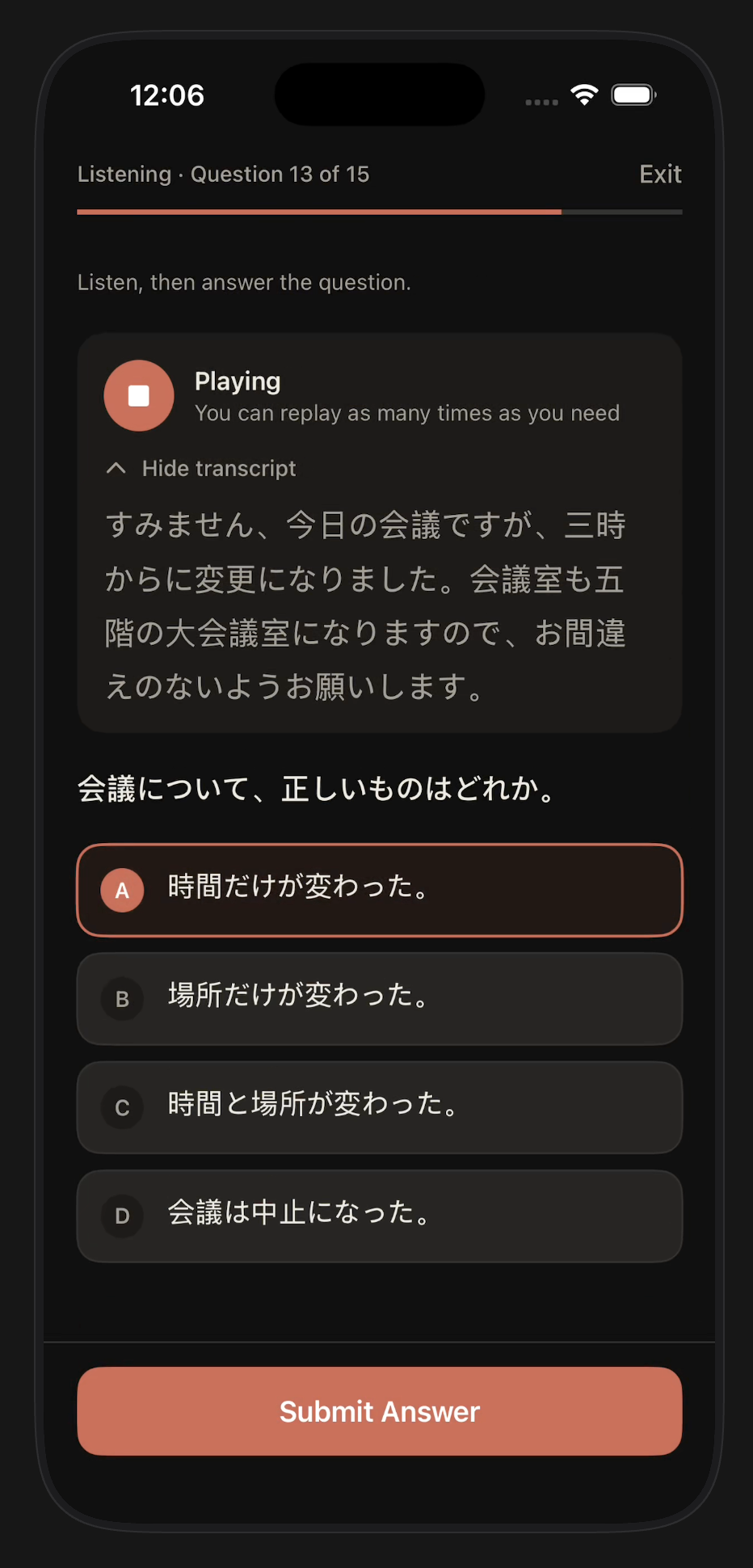
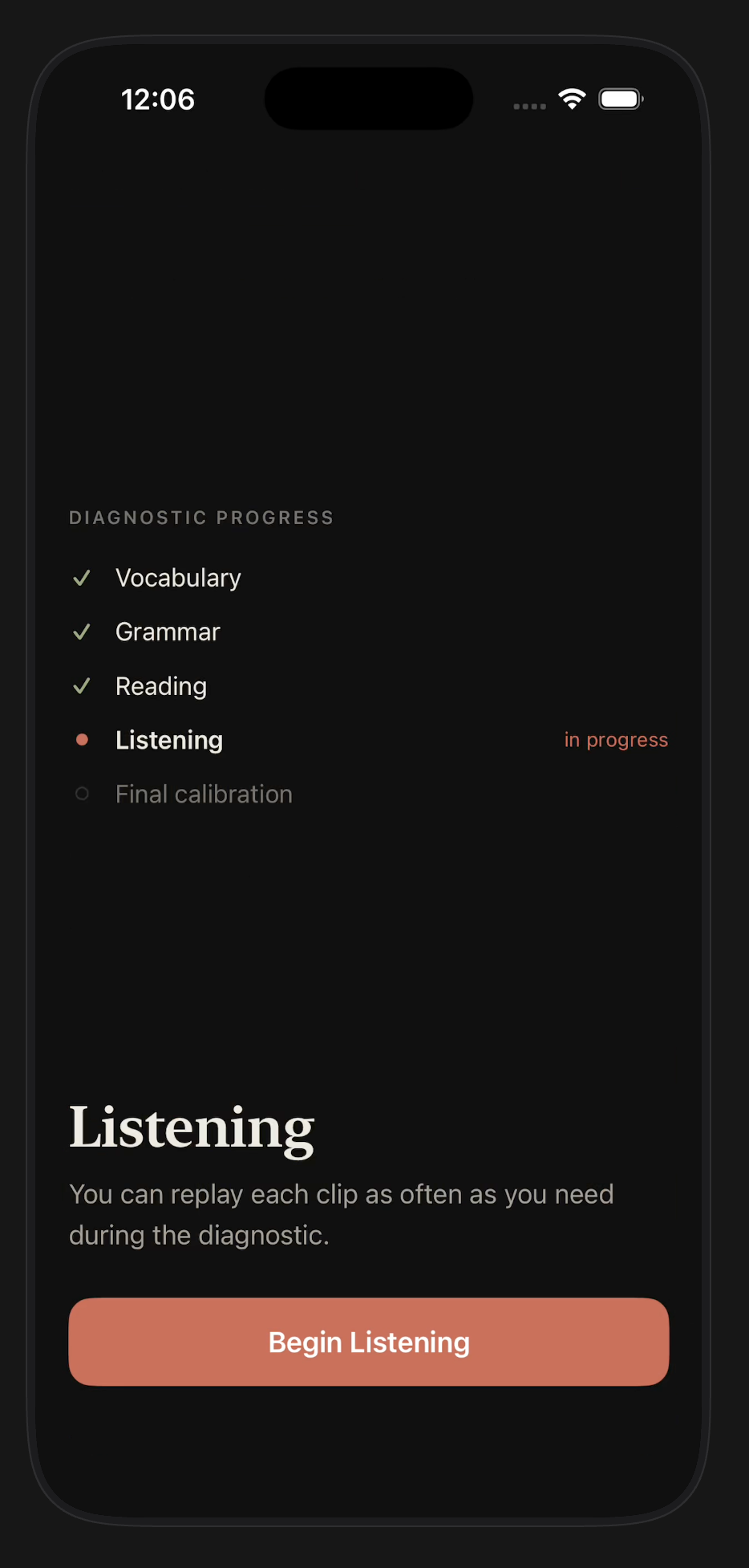
A short adaptive diagnostic reads vocabulary, grammar, reading and listening as separate strands. It also takes your goal, your timeline and how much time you can give it each week.
02 · Understand
It builds a picture, not a score
The result is not one number. It is a view of what is secure, what is fragile, and what has not been seen yet — held separately for each skill, because they move at different speeds.
03 · Plan
It identifies your next learning need
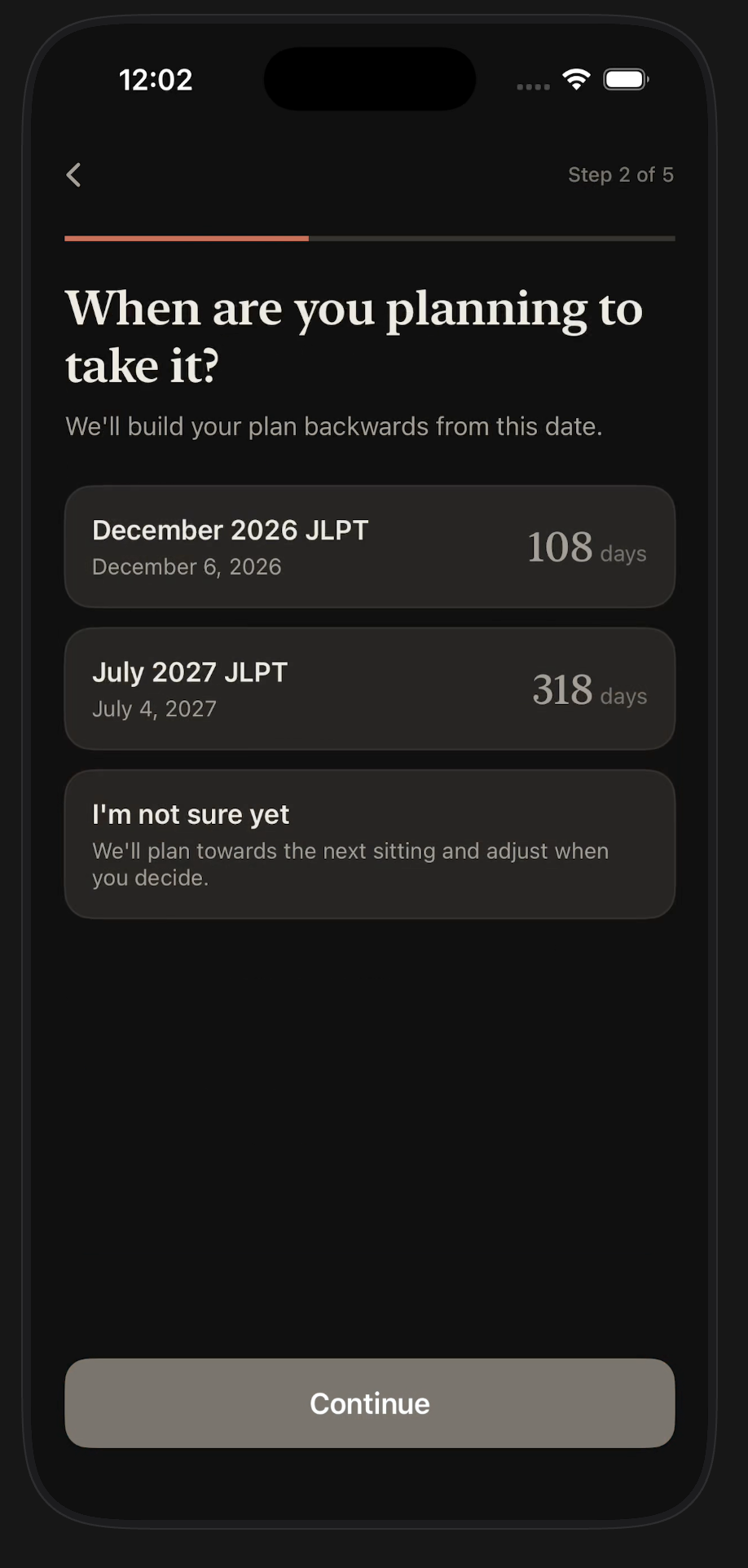
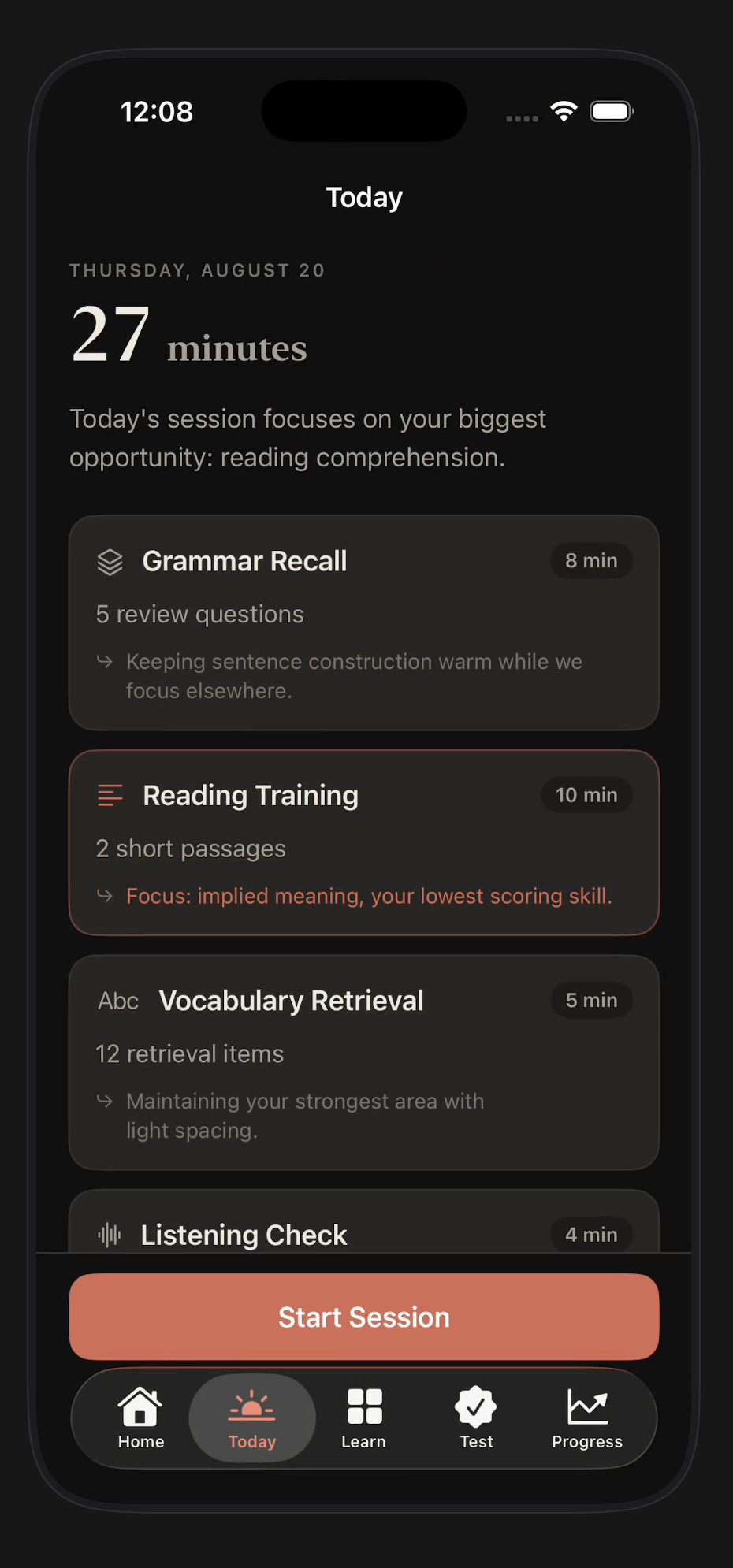
From that picture, Passage selects what is most worth your attention now: the thing that unlocks the most of everything else, sized to the time you actually have today.
04 · Learn
It creates focused learning experiences
Activities are built around that need and delivered in real context — a word inside a sentence that matters, a form inside a situation, audio at the edge of comfortable.
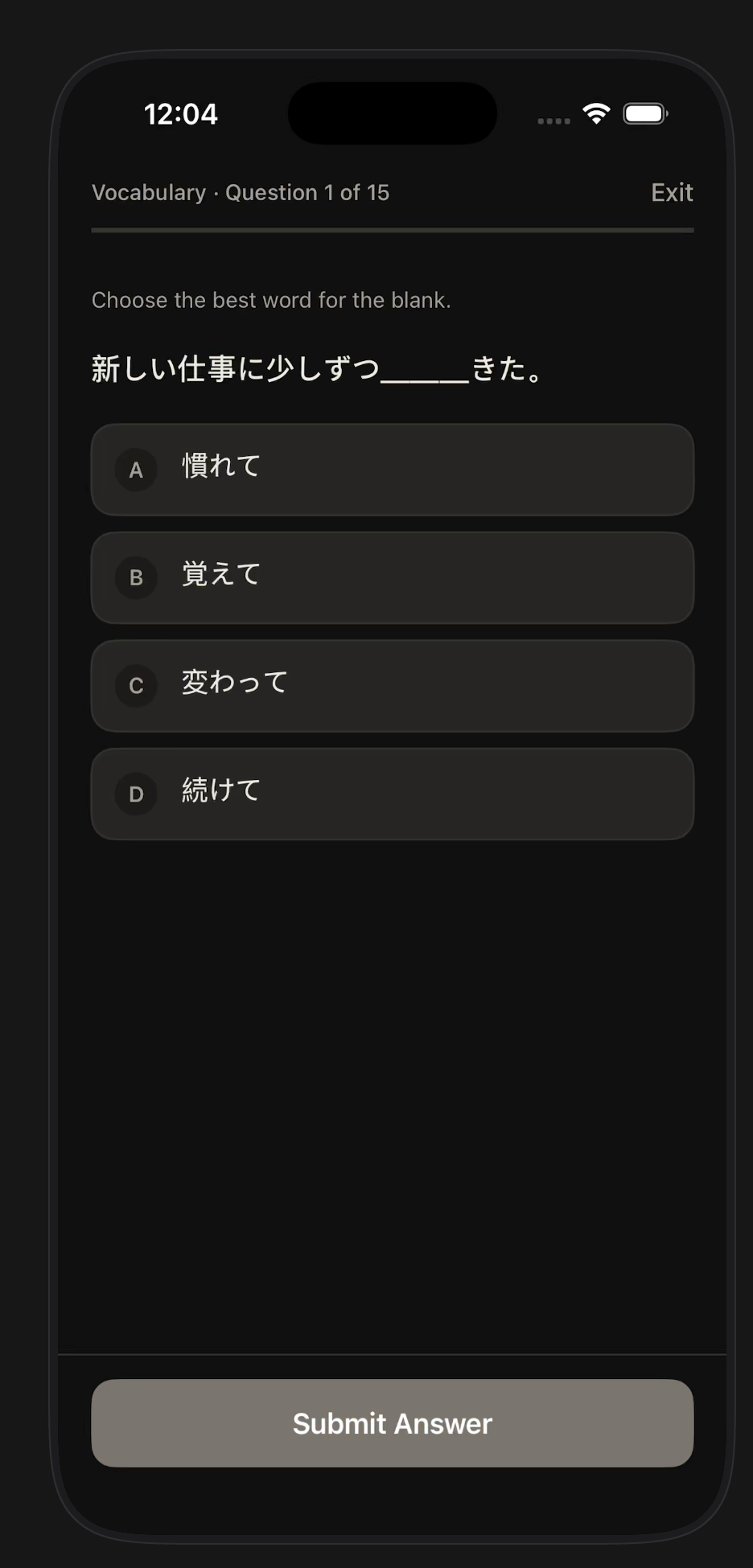
05 · Respond
Every answer is evidence
What you choose, what you avoid, how much support you needed and how long it took all say something. Passage keeps the context, not just the result.
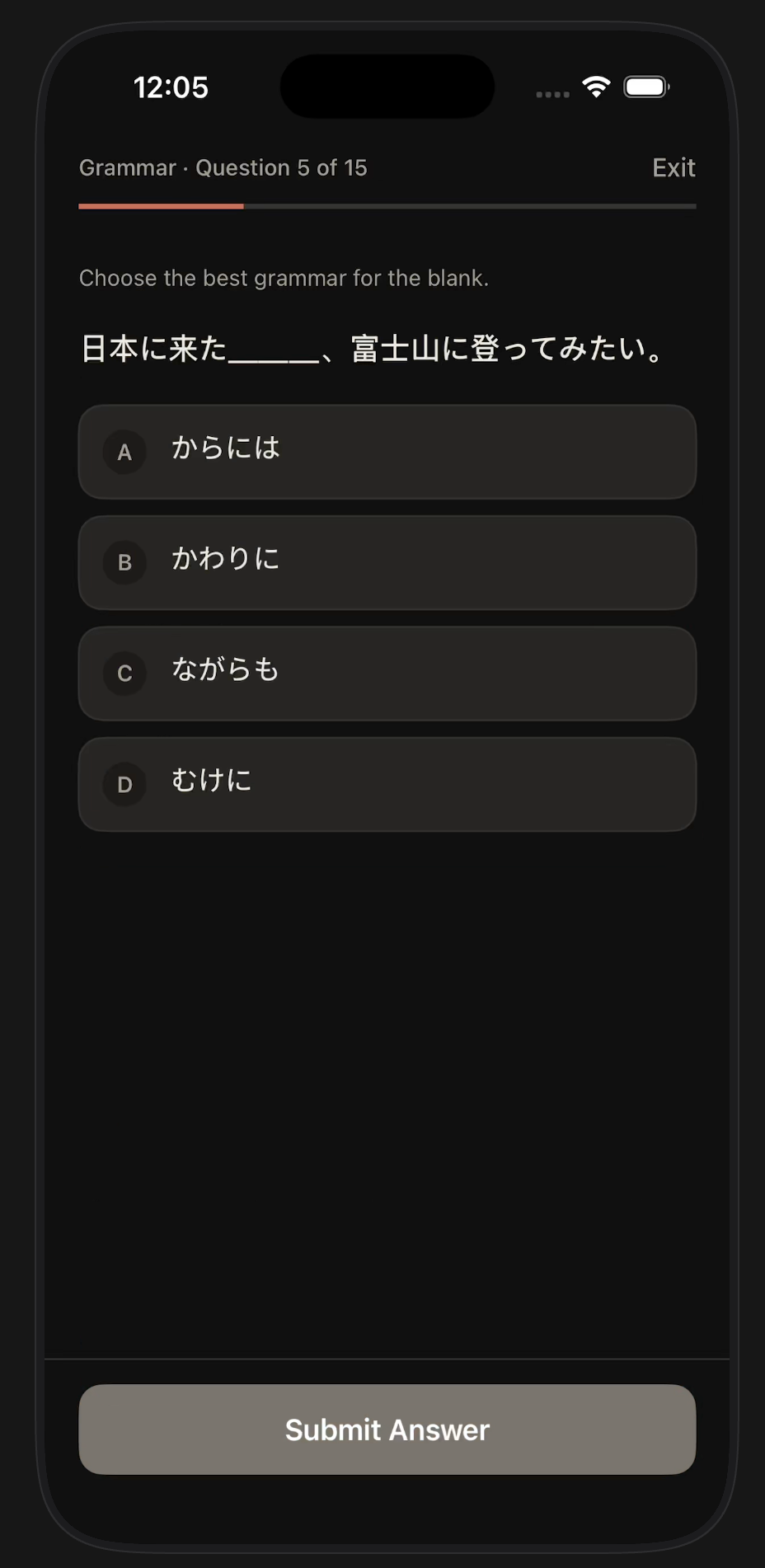
06 · Adapt
Your responses shape what happens next
The path is recalculated as you go. Nothing about it is fixed in advance, so a hard week or a breakthrough changes tomorrow rather than being absorbed by a schedule.